Reflections from deRSE25 in Stuttgart
Last week I attended the RSE conference of the German Research Software Engineering association (deRSE) in Stuttgart – my first time at such an event, and what a crowd to start with: welcoming, passionate, and genuinely fun to be around.
There was a lot going on – just three highlights out of many.
The knowledge is in the source code
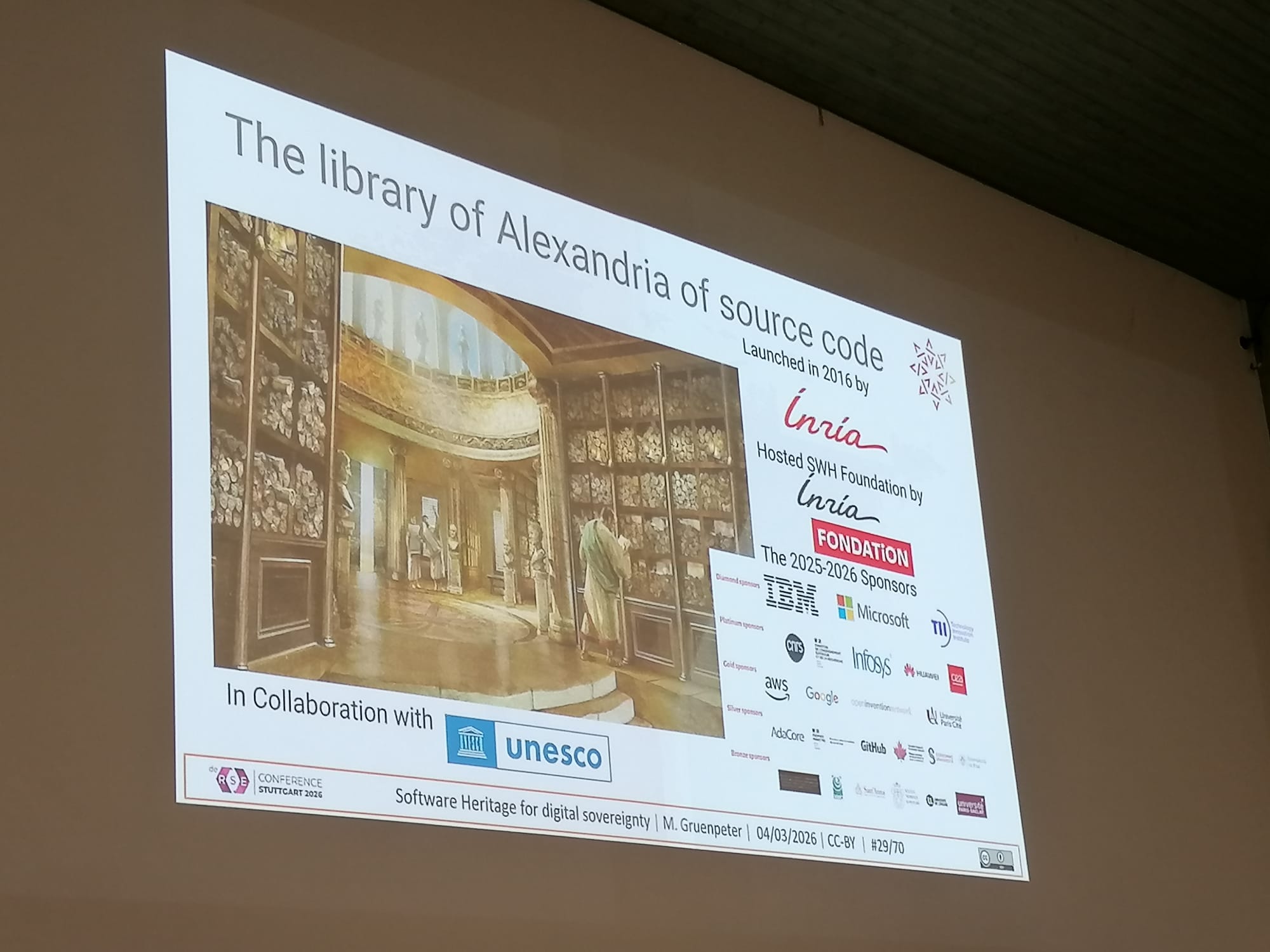
The plenary on Software Heritage and digital sovereignty by Morane Gruenpeter from Software Heritage set a thoughtful tone – a reminder that research software is cultural and scientific heritage, and that preserving it is not just a technical problem but a matter of collective responsibility.
Drawing a parallel to the ancient Library of Alexandria, the speaker framed preservation as building for resilience – not hoarding software in locked vaults, but ensuring its survival through proliferation.
A key piece of infrastructure enabling this is SoftWare Hash IDentifiers (SWHIDs): persistent, intrinsic identifiers for software artifacts like source files, commits, and releases swhid – now even an ISO international standard (ISO/IEC 18670:2025) swhid. Unlike a URL or a DOI, a SWHID is derived from the content itself, meaning it remains valid regardless of where the software is hosted.
Docker alone is not enough
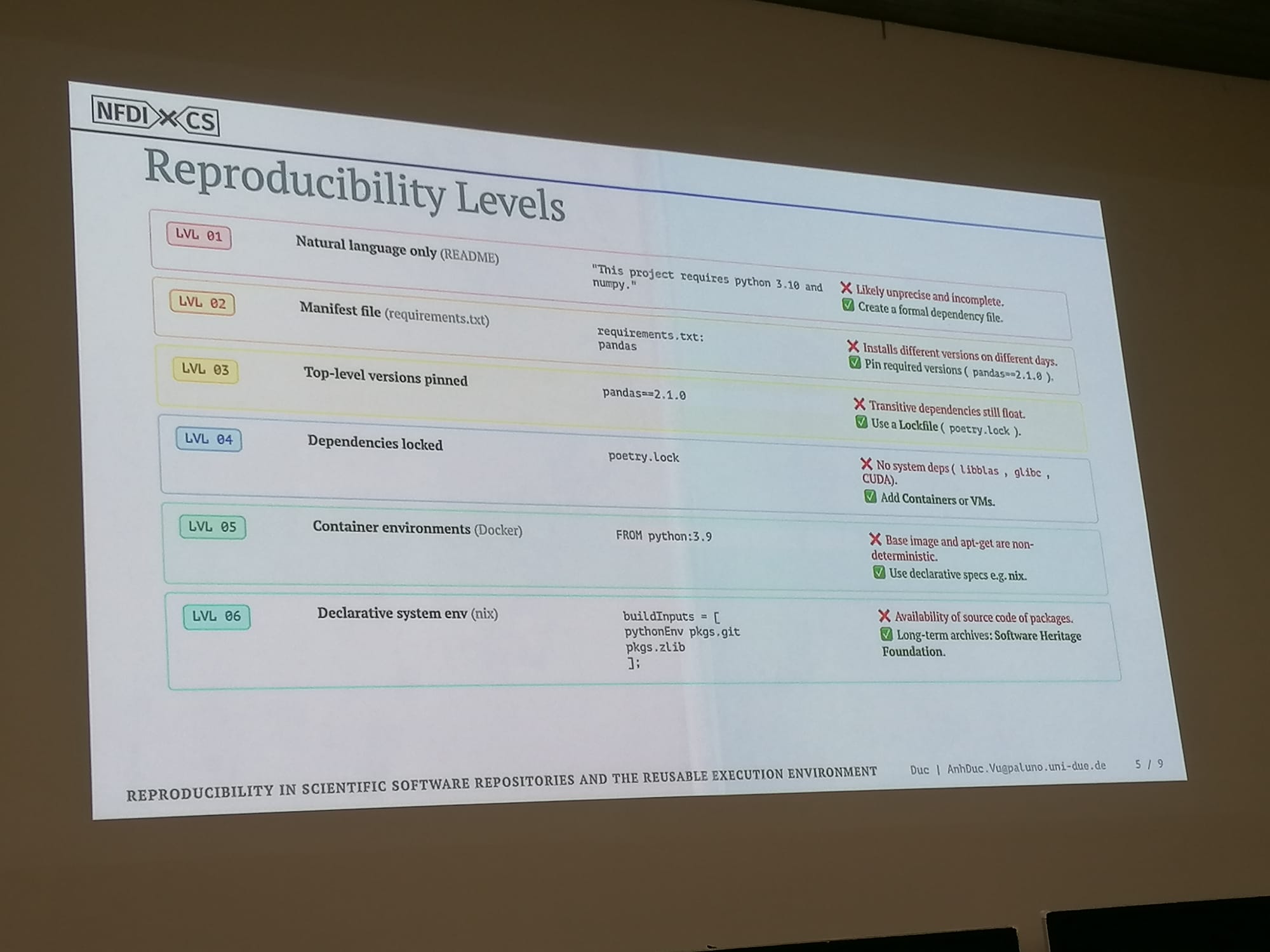
A talk by Anh Duc Vu from NFDIxCS on reproducibility and reusable execution environments was a genuine eye-opener. I came in thinking “use Docker, job done.” Turns out that’s just the beginning – truly reproducible environments require much more deliberate thinking about long-term portability and archival. A humbling and useful reminder.
RSE career pathways in Germany
Finally, the fishbowl discussion on RSE career pathways in Germany was really engaging. The Mentimeter results told a familiar story: people find meaning in the work – the collaboration, autonomy, and impact – but career prospects and role clarity remain persistent pain points. Vague job titles, lack of permanent positions, and unclear progression paths came up again and again. Still, the room was full of people who care deeply and are actively pushing for change – that alone felt energising.